Hemp Licensing, Pre-Harvest Sampling and THC Testing
How hemp licensing, FSA acreage reporting, the 30-day pre-harvest sampling window, total THC testing and negligence rules work under federal and state plans.
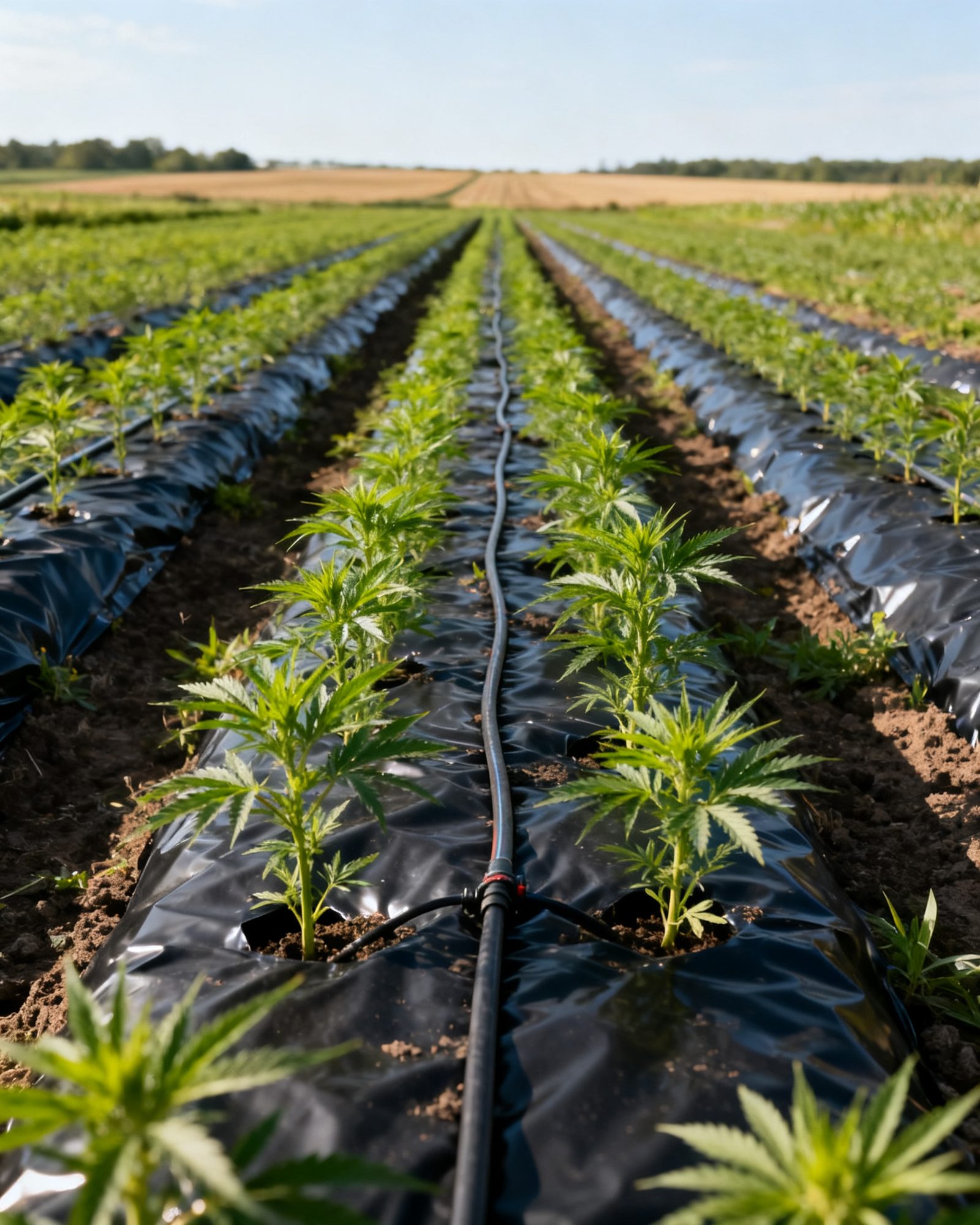
Growing hemp in the United States requires a license or authorization under a state hemp program, a tribal hemp program or the USDA hemp program, and the license is only the first of several compliance steps. Before harvest, a sampling agent must cut samples from the flowering tops no more than 30 days before the anticipated harvest, and a laboratory must report total THC on a dry weight basis. A lot that tests above the acceptable level must be disposed of or remediated under the plan’s procedures. The federal definition of hemp was amended in November 2025, with the change not yet in force and parts of it delayed, so check current rules with your state department of agriculture (or USDA where there is no state or tribal plan) before planting.
Who licenses a hemp crop, and where the application goes
The licensing route depends on where the growing site is. A grower must be licensed or authorized under a state hemp program, a tribal hemp program or the USDA hemp program. Where the state or tribe has an approved plan, the grower applies there. Where there is no approved state or tribal plan, growers apply to USDA through its online Hemp eManagement Platform, and USDA accepts applications year-round. The USDA Agricultural Marketing Service administers that federal route.
A license is personal as well as geographic. A person with a state or federal felony conviction relating to a controlled substance may not produce hemp for 10 years from the date of the conviction, under 7 CFR 990. That rule applies regardless of which plan the grower is under.
Once licensed, a USDA licensee reports hemp acreage to the USDA Farm Service Agency (FSA) within 30 days of planting, with the location of each lot. The acreage report is a separate filing from the license application, and it is tied to the planting date rather than to the license date.
What the 2025 definition change means for testing
Until 2018, hemp was treated as marijuana under the Controlled Substances Act. The Agriculture Improvement Act of 2018 removed hemp from the definition of marijuana and set the limit at a delta-9 THC concentration of not more than 0.3 percent on a dry weight basis. Hemp stayed subject to USDA and FDA regulation.
In November 2025, the FY2026 agriculture appropriations act (P.L. 119-37, enacted November 12, 2025) amended the definition. Once in effect, the 0.3 percent dry-weight limit applies to total THC, including THCA, not only delta-9 THC. The new definition explicitly includes industrial hemp, grown for stalk, fiber, grain, seed oil and similar non-cannabinoid uses. It excludes viable seeds above the total THC limit, intermediate products above 0.3 percent total THC, and final cannabinoid products with more than 0.4 milligrams of THC per container.
The change was to take effect November 12, 2026. The Continuing Appropriations and Extensions Act, 2027 (P.L. 119-103, September 2026) delayed parts of the new definition to December 11, 2026. The exclusion of products with cannabinoids not naturally produced by the plant still takes effect November 12, 2026. Rules and dates may change again, so confirm the current definition with your state department of agriculture before you plant or harvest.
The 30-day sampling window
Before harvest, a sampling agent must collect samples no more than 30 days before the anticipated harvest. The window is a ceiling, not a target: the sample has to represent the crop as it will be cut, and total THC rises as flowers mature. Timing the harvest and timing the sample are therefore the same decision. The pre-harvest test is also a compliance step, not only an agronomic one, and the harvest date on the plan should match the date the crop is actually cut.
Samples come from the flowering tops: the top five to eight inches of the main stem, terminal bud or central cola. The laboratory reports total delta-9 THC on a dry weight basis after decarboxylation, meaning THC plus the THC that THCA would become, together with its measurement of uncertainty. The measurement of uncertainty matters because the result is read together with it when the plan decides whether a lot is within the acceptable level.
USDA is delaying until December 31, 2026 enforcement of the requirement that hemp be tested by a DEA-registered laboratory. Until then, check which laboratories your state or tribal plan, or USDA, accepts before you schedule sampling.
| Step | What happens | Timing or rule |
|---|---|---|
| License | State, tribal or USDA hemp program | Before planting |
| Acreage report | USDA Farm Service Agency, with lot locations | Within 30 days of planting (USDA licensees) |
| Pre-harvest sample | Sampling agent cuts flowering tops | No more than 30 days before anticipated harvest |
| Laboratory analysis | Total delta-9 THC after decarboxylation, with measurement of uncertainty | Per the plan’s procedures |
| Result above the limit | Disposal or remediation under the plan | Per the plan’s procedures |
When a crop tests hot
A lot that tests above the acceptable hemp THC level must be disposed of or remediated under the plan’s procedures. Disposal and remediation are plan-specific processes, and the grower should expect to document both the test result and the disposition of the lot. A crop that tests above the limit is often called hot hemp; the term describes the test result, not a judgment about the grower.
A test above 0.3 percent is not a negligent violation if the grower made reasonable efforts and the plant did not exceed 1.0 percent total THC on a dry weight basis. A producer with three negligent violations in a 5-year period becomes ineligible to produce hemp for 5 years. What counts as reasonable efforts is decided under the plan; ask the state department of agriculture or USDA, not this page.
Where licensing fits in the growing season
The license, the acreage report and the sampling window sit around a crop that still has to be grown. Variety type, planting density and irrigation decisions are covered in industrial hemp farming basics in the US, and the interaction between maturity, frost and the sample date is covered in hemp harvest timing and the pre-harvest test. Mature hemp tolerates a light frost of 29-32°F that would kill seedlings in spring, so transplants go out after the danger of frost and harvest ideally comes before the first hard frost, according to University of Vermont Extension. The sample has to be taken before that harvest, inside the 30-day window.
What goes wrong in licensing and testing
- Planting before the license is in hand. The license or authorization must be in place before the crop goes in the ground. Confirm the approval, not just the application, before planting.
- Missing the FSA acreage report. USDA licensees report within 30 days of planting, with the location of each lot. A late report is a compliance problem even when the crop itself is fine.
- Sampling too early or too late. The sample must be taken no more than 30 days before the anticipated harvest. Sampling early and then letting the crop mature can produce a result that does not represent the harvested lot.
- Cutting the wrong part of the plant. Samples come from the flowering tops, the top five to eight inches of the main stem, terminal bud or central cola. Other plant parts are not what the rule calls for.
- Reading a single number instead of the range. The laboratory reports total delta-9 THC after decarboxylation together with its measurement of uncertainty. The acceptable level is judged with that uncertainty in view.
- Assuming the definition is fixed. The amended definition moves the 0.3 percent limit to total THC, including THCA; it was due November 12, 2026, with parts delayed to December 11, 2026. Rules and dates may change again.
- Assuming any laboratory will do. Enforcement of the DEA-registered laboratory requirement is delayed until December 31, 2026, so confirm which laboratories the plan accepts.
- Treating a hot lot as a loss with no procedure. A lot above the acceptable level must be disposed of or remediated under the plan’s procedures. Know the procedure before the result arrives.
- Ignoring the negligence record. Three negligent violations in a 5-year period make a producer ineligible for 5 years. Not every hot result is a negligent violation; the plan decides how each one is recorded.
Checking the rules before you plant
The federal definition is changing, and state and tribal plans differ in their application forms, sampling procedures, laboratory lists and remediation rules. Check current rules with your state department of agriculture (or USDA where there is no state or tribal plan) before planting, before sampling and before harvest. The license, the acreage report and the pre-harvest test are three separate steps, and each one has its own deadline.
Common questions
How many days before harvest can I take a hemp sample?
A sampling agent must collect samples no more than 30 days before the anticipated harvest. The sample comes from the flowering tops, the top five to eight inches of the main stem, terminal bud or central cola.
What does total THC mean on a hemp test report?
The laboratory reports total delta-9 THC on a dry weight basis after decarboxylation, meaning THC plus the THC that THCA would become, together with its measurement of uncertainty. Once the amended definition takes effect, the 0.3 percent limit applies to total THC, including THCA.
What happens if my hemp tests above the limit?
A lot that tests above the acceptable hemp THC level must be disposed of or remediated under the plan's procedures. A test above 0.3 percent is not a negligent violation if the grower made reasonable efforts and the plant did not exceed 1.0 percent total THC on a dry weight basis.
Do I need a DEA-registered laboratory for hemp testing?
USDA is delaying until December 31, 2026 enforcement of the requirement that hemp be tested by a DEA-registered laboratory. Check which laboratories your state or tribal plan accepts before scheduling sampling.
Where do I apply for a hemp license?
Apply under a state hemp program, a tribal hemp program or the USDA hemp program, depending on where the growing site is. Where there is no approved state or tribal plan, growers apply to USDA through its online Hemp eManagement Platform, which accepts applications year-round. Check current rules with your state department of agriculture.
Read next
Hemp Harvest Timing and the Pre-Harvest Test
Hemp harvest timing is both an agronomic and a compliance decision. Learn season lengths, the 30-day sampling window, frost risk, and how to plan capacity.
Hemp Transplants vs. Direct Seeding on the Farm
How hemp growers choose between transplants and direct seeding: crop type, frost timing, hardening off, plastic mulch and drip, and the license rules that apply.
Hemp Plant Spacing and Irrigation Basics
Oregon State density figures for cannabinoid hemp, what spacing changes, drip under plastic mulch, irrigation response and disease risk with overhead water.