Fall Vegetable Transplants: Planning a Second Season
Use your first fall frost date to count back and schedule fall transplants: brassicas, greens, summer seed starting, hardening off in heat, and watering.
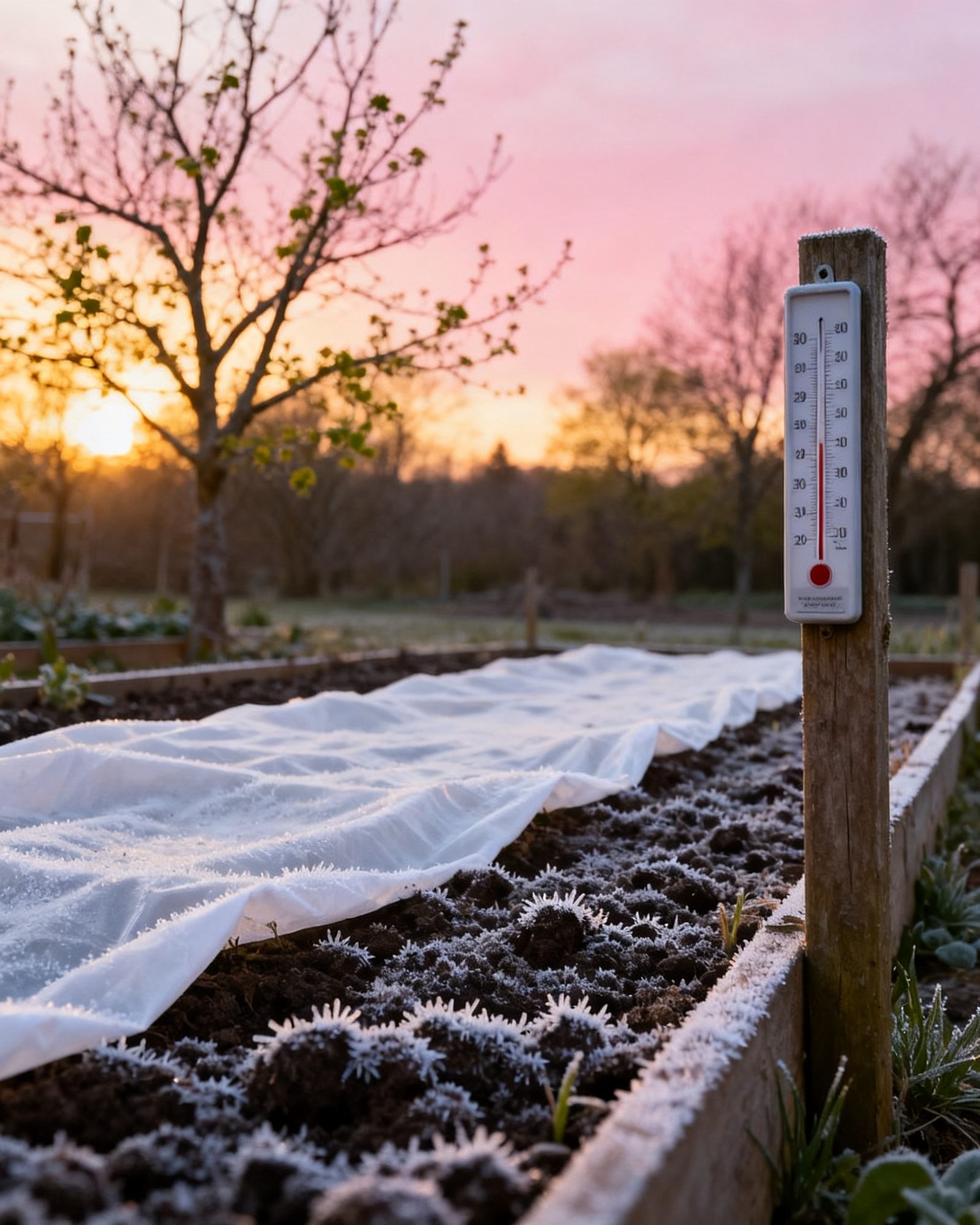
A fall vegetable garden is planned backward. Instead of waiting for the soil to warm in spring, you count back from the first fall frost date to the day each crop needs to go into the ground, then count back again to the day to start the seed. Fall transplants — broccoli, cabbage, cauliflower, kale, collards and lettuce — are set out in the heat of summer so they are established and sizing up by the time nights cool. The first frost date is the anchor; the rest is arithmetic and a little protection from the sun.
What the frost date tells you, and what it does not
The first fall frost date is a probability, not a promise. NOAA’s National Centers for Environmental Information publishes, for weather stations across the country, the probable dates of the first fall frost, freeze and hard freeze, calculated from 30-year periods (the tables in use describe 1981-2010). A freeze is air temperature below 32°F; a hard freeze is below 28°F; 36°F is the threshold NCEI uses for frost, because frost can form above freezing when the air is humid. The tables give probabilities from 10% to 90%. The date usually quoted as the “average first frost date” is the 50% date for 32°F — in one year out of two the first freeze comes earlier than that date. A conservative gardener plans by the 10% date, when only one year in 10 has an earlier freeze.
Frost dates are past averages, not forecasts. Microclimates and each year’s weather differ, so check the forecast before setting out tender plants and ask the local Cooperative Extension office for local dates. The spring side of the calendar works the same way; if you need a refresher on reading those tables, see last frost date: how to find it and how much to trust it.
Hardiness zones are a different tool and are often confused with frost dates. The USDA Plant Hardiness Zone Map is based on the average annual extreme minimum winter temperature — the average of the coldest night of each year — not the coldest temperature ever recorded. Zones are 10-degree F bands from zone 1 to zone 13, each split into half zones “a” and “b” that are 5-degree F bands. The 2023 map uses 1991-2020 weather data from 13,625 stations. Zones are a guide for whether a perennial survives winter. They say nothing about frost dates, summer heat, rainfall or soil. For a fuller explanation, see USDA hardiness zones explained: what your zone tells you. For fall transplant scheduling, the frost date is the number that matters.
Counting back from the first fall frost
Start with the first fall frost date at the 50% probability, then adjust earlier if you want a margin. Work backward in three steps:
- Decide the date you want the crop mature or ready to begin harvest.
- Subtract the days from transplanting to maturity for that crop.
- Subtract the weeks the seedling needs indoors, and that is your sowing date.
Broccoli is the clearest example. Maryland Extension gives 55 to 65 days from transplanting for broccoli, and fall transplants take about 4 to 6 weeks from seeding. Add the two together and count back from the date you want to start cutting; broccoli is hardy, and the fall crop often yields better than spring in the mid-Atlantic. Cabbage and cauliflower follow similar timing. For the details of raising those seedlings, see broccoli, cabbage and cauliflower seedlings.
Greens are more forgiving. Leafy greens need only 2 to 4 weeks indoors before they go outside, according to Maryland Extension, and lettuce can be direct-seeded or transplanted. Kale and collards are hardy and can carry on after light frosts. The table below compares the indoor timing figures from the two extension sources; where they differ, use the range as a guide and watch the plants.
| Crop | Maryland Extension: weeks indoors | Clemson Extension: seeding to transplant |
|---|---|---|
| Leafy greens | 2 to 4 | lettuce 5 to 7 |
| Cabbage, broccoli, cauliflower | 4 to 6 | broccoli, Brussels sprouts, cabbage, cauliflower, collard, kale 5 to 7 |
| Cucumber, squash, melons | 3 to 5 | 3 to 5 |
| Tomato | 5 to 6 | 6 to 8 |
| Pepper, eggplant, onion | 8 to 10 | pepper 8 to 10; eggplant 6 to 8 |
For fall, the brassicas and greens are the reliable transplants. Warm-season crops like tomato and pepper are spring projects; a fall planting of those is a gamble against the first frost, not a plan.
Starting seeds in summer heat
Summer seed starting is harder than spring starting for one reason: heat. A potting-mix temperature of 65° to 75°F suits most vegetable seeds, according to Maryland Extension, and a summer garage or windowsill can run well above that. Lettuce seed in particular germinates poorly when the soil is too warm; soil over 85°F is usually a problem for spinach and lettuce seed. Start those in the coolest spot you have, and keep the mix evenly moist.
Use a soilless seed-starting mix, not garden soil. Garden soil is too dense in a container — about 75 pounds per cubic foot — and may carry weed seeds and pathogens; good soilless media weigh about 10 pounds per cubic foot. Moisten the mix before filling, and fill containers to within one inch of the top. A standard plastic flat is 10 inches by 20 inches and holds 10 to 120 plants depending on cell size.
Light is the other summer variable. A window is seldom enough; stems stretch and lean. Keep fluorescent or LED fixtures 2 to 6 inches above the plants, on for 14 to 16 hours a day with an outlet timer, per Maryland Extension. Clemson Extension gives 16 to 18 hours and keeps tubes 2 to 4 inches above the seedlings, raising them as plants grow. In summer, watch the heat under the lights — a plastic tent over a grow light can hold 70° to 75°F, which is useful in spring but can cook seedlings in a warm room.
A small fan near seedlings from the two-true-leaf stage makes them sway and begins toughening them; it also dries them faster, so watch moisture. A common mistake is sowing too early, which gives tall, root-bound plants that do poorly in the garden. For fall, the bigger risk is the other way — starting too late — so count the weeks carefully from the first frost date.
Hardening off in summer sun
Seedlings raised indoors have never met full sun, wind or heat, and summer sun is harsher than spring sun. Hardening off gradually adapts them. Maryland Extension describes a 5- to 14-day period depending on the crop, beginning 1 to 2 weeks before planting out. Clemson Extension starts once plants are about three inches tall and continues for two to three weeks. Start in a shaded, wind-protected spot for part of the day, increase sun by an hour or two each day, and water less often but never let plants wilt. Do not put tender seedlings out on windy days or below 45°F.
Cool-season crops such as lettuce and cabbage should come in if a freeze is forecast, and warm-season crops such as tomato and pepper should come in if the night will drop below 50°F. Overdoing hardening harms some crops: cauliflower can form thumb-sized heads and stop. Hardening off matters most for cabbage, broccoli and cauliflower.
Watering new transplants in heat
A summer transplant is losing water fast. Water plants several hours before planting, dig a hole large enough for the root mass, firm the soil, and water in with a weak liquid fertilizer at label dilution. Shade and shelter new transplants for a few days with baskets, pots or floating row cover. Check daily; a transplant that wilts hard on the first afternoon may not recover.
Watering indoors follows the same principle: wait until the top of the mix is nearly dry, then water from the top until it drains, or from below by setting containers in a shallow tray. Clemson Extension suggests filling a tray with 1 to 2 inches of water and letting the cells absorb it for 3 to 10 minutes. Saturated media starve roots of oxygen.
What goes wrong
Starting too late. The most common fall failure. If the seedling goes out after the crop’s window has closed, it meets cold before it matures. Count back from the first frost date and sow on time.
Transplants scorched in summer sun. Seedlings moved straight from indoor lights to full July sun collapse or scorch. Harden off gradually, and shade new transplants for a few days.
Sowing too early in the heat. A flat started too soon in a hot room gives tall, root-bound plants. Keep the light close and the temperatures moderate.
Damping-off. Water molds — Pythium, Phytophthora and Rhizoctonia — need free water. Use a soilless mix, clean containers and no overwatering, and let the top of the mix dry slightly between waterings. Infected seedlings cannot be saved: remove and discard them with their mix, wash containers, soak them for 1 to 2 minutes in 1 part chlorine bleach to 10 parts water, and rinse.
Fungus gnats. Tiny dark flies around pots are mainly a sign of overwatering. Let the mix dry and use yellow sticky traps to monitor. Products based on Bacillus thuringiensis var. israelensis (Bti) are labeled for the larvae; follow the label.
Crowding. Leaving seedlings crowded in the flat too long is one of the most common mistakes. Move plants started together in a flat to their own containers shortly after the first true leaves appear. Hold seedlings by a leaf or the cotyledons, never by the stem.
Buying overgrown plants. Good transplants are stocky with deep green leaves and white, fibrous roots; avoid overgrown, woody plants with a thick mat of circling roots and plants with pests.
A fall garden rewards planning more than any other season. The frost date sets the clock, the crop’s days-to-maturity sets the planting date, and the weeks indoors set the sowing date. Get those three numbers in order and the rest is watering and a little shade.
Common questions
When should I start fall broccoli seeds indoors?
Count back from your first fall frost date. Broccoli takes 55 to 65 days from transplanting to maturity, and fall transplants take about 4 to 6 weeks from seeding. Subtract both from your target harvest date to find the sowing date.
Can I use my USDA hardiness zone to plan fall planting?
No. Hardiness zones describe average annual extreme minimum winter temperature and say nothing about frost dates. Use your first fall frost date for scheduling and your zone for choosing perennials that survive winter.
Why do my summer-started seedlings get tall and weak?
Too little light and too much warmth. Keep fixtures 2 to 6 inches above the plants for 14 to 16 hours a day, and avoid sowing too early, which gives tall, root-bound plants.
How do I harden off transplants in summer heat?
Start in a shaded, wind-protected spot for part of the day, increase sun by an hour or two each day, and water less often but never let plants wilt. Maryland Extension describes a 5- to 14-day period; Clemson Extension suggests two to three weeks starting when plants are about three inches tall.
Which crops are best for a fall transplant garden?
Broccoli, cabbage, cauliflower, kale, collards and lettuce. Fall broccoli often yields better than spring in the mid-Atlantic. Warm-season crops like tomato and pepper are spring projects and risk the first frost.
Read next
Last Frost Date: How to Find It and How Much to Trust It
Learn where last frost dates come from, what the 10/50/90 percent probabilities mean, and how to turn a frost date into a safe planting schedule.
Build a Seed Starting Calendar from Your Frost Date
Turn one frost date into a full sowing and planting schedule: weeks indoors per crop, cool- versus warm-season timing, hardening off, and succession sowing.
USDA Hardiness Zones: What Your Zone Tells You
The USDA hardiness zone map shows average winter cold, not frost dates. Learn what a zone such as 7a means, how to find yours, and what to plan by instead.