Last Frost Date: How to Find It and How Much to Trust It
Learn where last frost dates come from, what the 10/50/90 percent probabilities mean, and how to turn a frost date into a safe planting schedule.
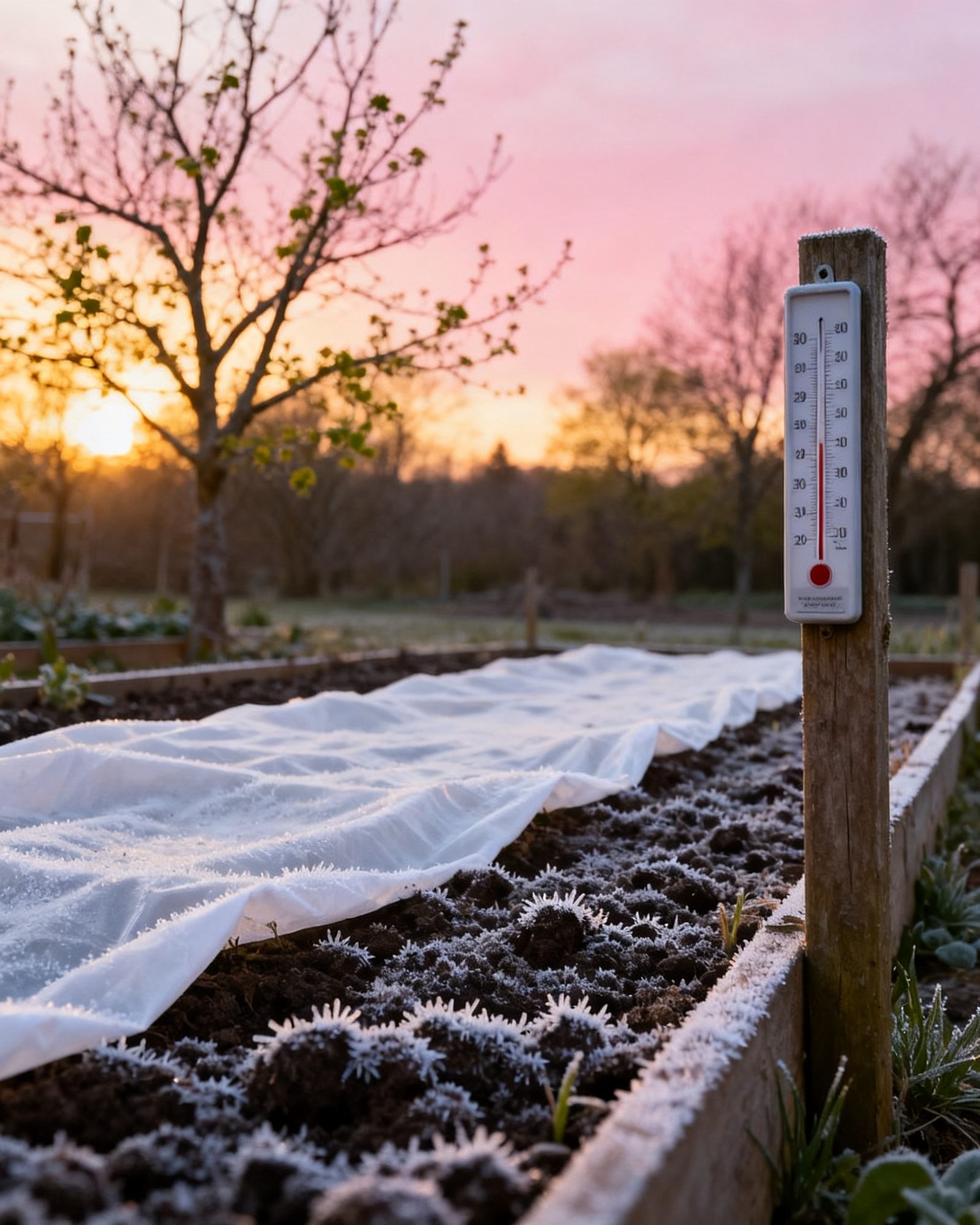
The last frost date is the probable date of the last spring freeze at a given location and probability level. It is not a forecast and not a promise, and frost can still come after it. It is worked out from 30 years of records of when the last freeze has fallen, published by NOAA’s National Centers for Environmental Information (NCEI) for weather stations across the US. The date usually quoted as the “average last frost date” is the 50% date for 32°F: in one year out of two, the last freeze comes later than that date. Treat it as the middle of a range, not the starting gun.
What the frost tables actually measure
NCEI publishes, for stations across the country, the probable dates of the last spring and first fall frost, freeze and hard freeze. The tables in use describe 1981-2010. Three thresholds matter:
- A freeze is air temperature below 32°F.
- A hard freeze is below 28°F.
- 36°F is the threshold NCEI uses for frost, because frost can form above freezing when the air is humid.
That last point surprises many gardeners. A night at 36°F with clear skies and still air can leave frost on the windshield and on tender seedlings, even though the thermometer never reached freezing. The frost date and the freeze date are not the same line on the table.
Frost dates are past averages, not forecasts. They tell you what has happened at a station over 30 years. They say nothing about the coming week, and they say nothing about your yard. A low spot, a south-facing wall, a city heat island or a rural frost pocket can run several degrees away from the station. That is why the forecast and the local Cooperative Extension office matter as much as the table.
The probability levels, and which one to plant by
The NCEI tables give probabilities from 10% to 90%. Each level answers a different question, and each suits a different crop and a different appetite for risk.
| Probability level | What it means | Best used for |
|---|---|---|
| 90% | The earliest of the three dates; in most years a later freeze still comes | Only crops that withstand frost; an early, high-risk date |
| 50% | The “average” date; one year in two has a later freeze | General planning and record-keeping, not tender transplants |
| 10% | Only one year in 10 has a later freeze | Tender crops such as tomato, pepper and cucumber |
A conservative gardener plants tender crops by the 10% date. That is the date at which only one year in 10 has a later freeze. It pushes planting later than the familiar average, and it is the safer choice for warm-season crops that sulk or die in cold soil. The 50% date is useful for planning and for comparing one place with another, but it is a coin flip for tender plants.
The “freeze-free period” is the number of days between the last spring freeze and the first fall freeze at a given probability. It is a practical measure of your growing season, always read at a stated probability: frost can still fall inside it in some years.
Frost dates by ZIP code, and what they do not tell you
Frost dates by ZIP code are convenient, and they are only as good as the station behind them. A ZIP code can span a valley and a ridge, a lakeshore and an inland field. The NCEI table is tied to a weather station, and the station may be miles from the garden.
Use the ZIP code lookup to get close, then adjust with what you know about the site. Cold air drains downhill and pools in low spots, so a garden at the bottom of a slope can frost while the ground up the road does not. A south-facing wall holds warmth and can bring a bed along earlier. A city lot holds heat; open countryside runs colder. These microclimates can differ from the mapped date by enough to matter for a tender crop.
Hardiness zones are a separate tool and answer a different question. The USDA hardiness zones explained page covers what your zone tells you: it is a guide to whether a perennial survives winter, based on the average annual extreme minimum temperature. It says nothing about frost dates, summer heat, rainfall or soil. A gardener needs both numbers, and neither one replaces the other.
Turning a frost date into a sowing and planting schedule
Once you have chosen a probability level, the frost date becomes the anchor for the whole season. Work backward for indoor sowing and forward for direct sowing and transplanting.
- Pick your spring date. For tender crops, use the 10% date for 32°F. For hardy crops, the 50% date is a reasonable planning anchor.
- Count backward for indoor sowing. Maryland Extension gives approximate times to grow transplants indoors: leafy greens 2 to 4 weeks; cabbage, broccoli and cauliflower 4 to 6 weeks; cucumber, squash and melons 3 to 5 weeks; tomato 5 to 6 weeks; pepper, eggplant and onion 8 to 10 weeks. Clemson Extension’s table runs a little longer for some crops: tomato and eggplant 6 to 8 weeks, pepper 8 to 10 weeks, lettuce and the cabbage family 5 to 7 weeks.
- Count forward for direct sowing. Beans, corn and carrots do not do well as transplants and should be sown directly in the garden (Clemson). Wait until the soil has warmed, not just until the frost date has passed.
- Mark the fall end. The first fall frost date tells you when to expect the season to close. The freeze-free period between the two dates is the window your crop has to mature.
The seed starting calendar page shows how to lay these counts out week by week so that seedlings are ready when the garden is, rather than oversize and root-bound on the windowsill. Sowing too early is a common mistake: it gives tall, root-bound plants that do poorly in the garden (Maryland Extension).
Choosing a date by risk, crop by crop
Not every crop needs the same caution. Match the date to the crop’s tolerance and to what a lost planting would cost you.
- Hardy crops. Broccoli withstands heavy frost. Five- to seven-week-old transplants go out four weeks before the last spring frost date. Temperatures below 45°F can stop heading or cause bolting, so the early date has a limit.
- Cool-season crops. Lettuce and cabbage can go out earlier than tender crops, but bring them in if a freeze is forecast during hardening off.
- Tender crops. Tomato, pepper and cucumber are very tender. Tomato goes out after all danger of frost when the soil has warmed. Pepper set out before the soil reaches 65°F will “just sit there.” Cucumber and melon can stay out overnight only if it will not fall below 50°F.
- Basil. Not tolerant of chilly temperatures; sow or plant after all danger of frost.
A cloudy, calm day is better than a sunny one for planting out. Water the plants several hours before, dig a hole large enough for the root mass, firm the soil, and water in with a weak liquid fertilizer at label dilution. Shade and shelter new transplants for a few days.
What goes wrong when the date is trusted too far
The most common mistake is treating the average last frost date as a safe planting date. It is the 50% date: half the years have a later freeze. Tender transplants set out on that date face a later freeze in about half of years.
The second mistake is ignoring the difference between frost and freeze. A forecast of 36°F can still mean frost on exposed seedlings. The third is forgetting the soil. Tomato goes out once the soil has warmed, not merely once the frost date has passed, and pepper planted before the soil reaches 65°F will sit. Black plastic laid 2-3 weeks before planting warms the soil for tomato.
The fourth is skipping the hardening-off step. Indoor-grown plants must be adapted gradually to sun, wind and cold. Maryland Extension describes a 5- to 14-day period beginning 1-2 weeks before planting out; Clemson says to start once plants are about three inches tall and continue for two to three weeks. Do not put tender seedlings out on windy days or below 45°F. Overdoing it harms some crops: cauliflower can form thumb-sized heads and stop. The guide to protecting transplants from cold covers row cover, cold frames and other ways to buy a few degrees on a cold night.
The fifth is relying on the table alone. Frost dates are past averages, not forecasts. Check the forecast before setting out tender plants, and ask the local Cooperative Extension office for local dates. A changed hardiness zone is no reason to remove plants that are thriving, and a frost date is no reason to plant on a schedule the weather has not agreed to.
Using the forecast and the local Extension office
The NCEI table gives you the shape of the season. The forecast gives you the next few nights. Both belong in the decision.
Before setting out tender plants, check the forecast for the coming week. If a cold night is coming, wait, or plan to protect what is already out. Keep row cover or baskets ready for a few days after planting. After proper hardening, tomato plants can usually tolerate a light, unexpected frost with little damage, but that is a tolerance, not a promise.
Cooperative Extension offices keep local frost dates and know the microclimates in their counties. A call or a look at the county office’s materials can correct a ZIP code lookup that lands on the wrong side of a ridge. The National Weather Service forecast is the final check before any tender plant goes into the ground.
Common questions
What is the difference between last frost date and first frost date?
The last frost date is the probable date of the last freeze in spring; the first frost date is the probable date of the first freeze in fall. The freeze-free period is the number of days between them at a chosen probability, not a stretch with no risk of frost.
How accurate is the average last frost date?
It is the 50% date for 32°F, so in one year out of two the last freeze comes later. It is a 30-year average, not a forecast, and microclimates can differ from the station.
Should I plant by the 10% or 50% frost date?
For tender crops such as tomato, pepper and cucumber, the 10% date is the conservative choice: only one year in 10 has a later freeze. The 50% date is useful for planning but is a coin flip for tender plants.
Why does my ZIP code frost date differ from a nearby town?
Frost dates are tied to weather stations, and a ZIP code can span a valley and a ridge. Cold air drains downhill and pools in low spots, so a garden at the bottom of a slope can frost while higher ground does not.
Can I trust the frost date for starting seeds indoors?
Use it as the anchor and count backward by the crop's indoor growing time. Maryland Extension gives tomato 5 to 6 weeks and pepper 8 to 10 weeks; Clemson gives tomato 6 to 8 weeks and pepper 8 to 10 weeks. Sowing too early gives tall, root-bound plants.
Read next
Fall Vegetable Transplants: Planning a Second Season
Use your first fall frost date to count back and schedule fall transplants: brassicas, greens, summer seed starting, hardening off in heat, and watering.
Build a Seed Starting Calendar from Your Frost Date
Turn one frost date into a full sowing and planting schedule: weeks indoors per crop, cool- versus warm-season timing, hardening off, and succession sowing.
USDA Hardiness Zones: What Your Zone Tells You
The USDA hardiness zone map shows average winter cold, not frost dates. Learn what a zone such as 7a means, how to find yours, and what to plan by instead.