Damping-Off: Why Seedlings Collapse and How to Prevent It
Damping-off is a water-mold disease that kills seeds before they emerge and topples seedlings at the soil line. Learn the signs, the causes, and how to prevent it.
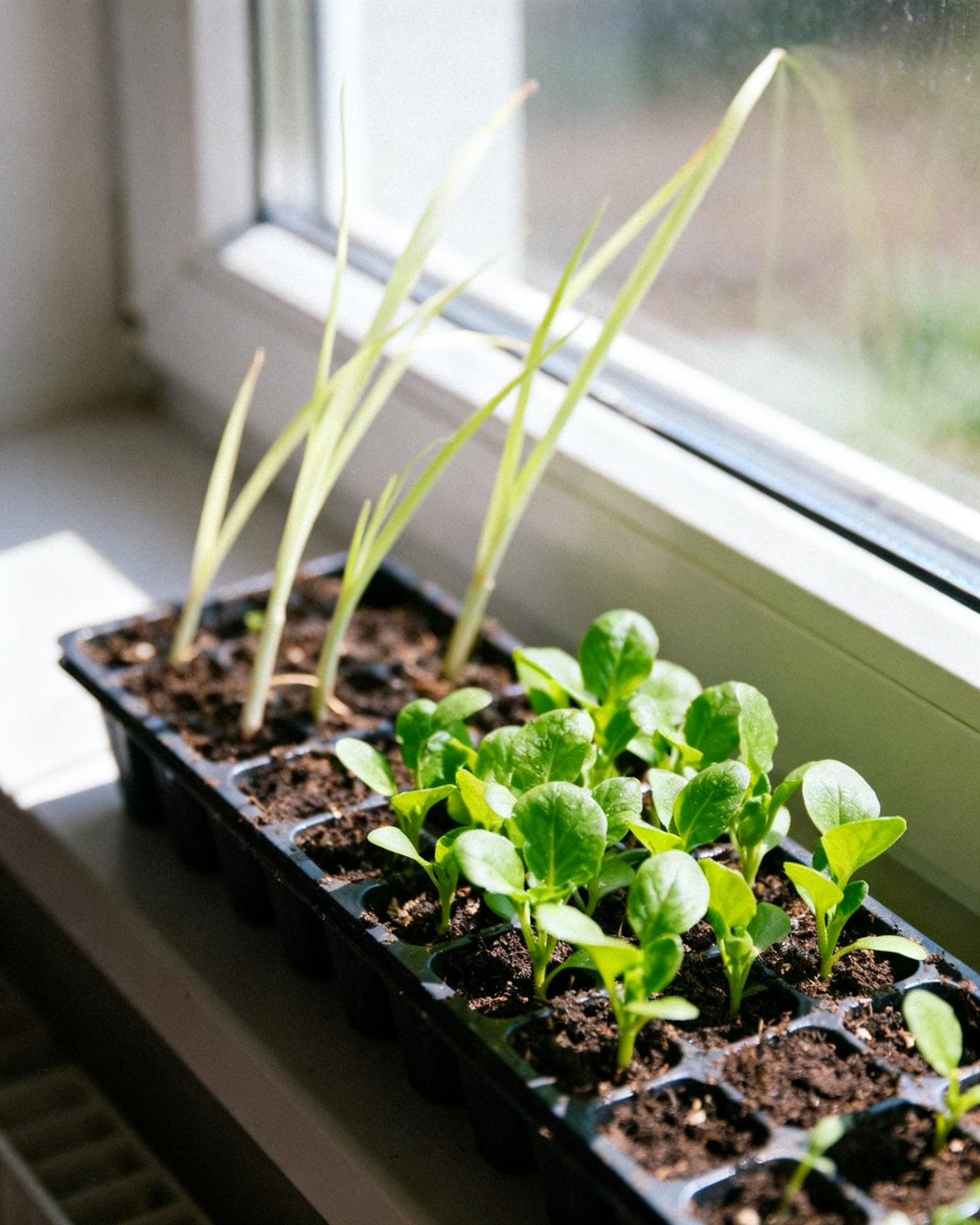
Damping-off is a disease of seedlings caused by water molds that thrive in wet, poorly drained growing media. It can kill seeds before they emerge or cause seedlings to collapse at the soil line soon after they appear. Once a seedling is infected, it cannot be saved; the fix is prevention, starting with a soilless mix, clean containers, and watering that lets the surface dry between drinks.
How to tell damping-off from other seedling problems
Damping-off shows up in two stages. Pre-emergence damping-off rots the seed or sprout before it breaks the surface, leaving gaps in the flat. Post-emergence damping-off causes a soft, dark lesion at the base of the stem, and the seedling falls over. A related form, called wirestem, is caused by Rhizoctonia: the lower stem becomes constricted and wiry, and the plant may survive but stays stunted.
Other problems can look similar. Seedlings that wilt from underwatering usually have dry mix and recover after watering. Seedlings that stretch and lean are reaching for light, not collapsing. If you are unsure what is wrong, a broader seedling problems diagnosis guide can help you sort out damping-off from drought, light starvation, fertilizer burn, and pest damage.
The organisms behind the collapse
Damping-off is caused by the water molds Pythium and Phytophthora and by the soil fungus Rhizoctonia. Maryland Extension notes that they need free water to infect plants. When the growing mix is saturated, roots and stems are surrounded by a film of water, and the pathogens swim or grow through it. Seedlings under lights are especially vulnerable because the warm, humid environment under a dome or in a closed room favors the disease.
Poor drainage makes it worse. A mix that holds too much water, a container without holes, or a tray that sits in a puddle all keep the root zone wet. Overwatering is a common trigger. For a detailed look at how much water seedlings actually need, see watering and fertilizing seedlings without drowning them.
Prevention starts with the mix and the container
Use a soilless seed-starting or potting mix, not garden soil, bagged topsoil, or garden mixes. Garden soil is too dense in a container (about 75 pounds per cubic foot) and may carry weed seeds and pathogens. Good soilless media weigh about 10 pounds per cubic foot and are formulated to drain well. Clemson Extension notes that soilless mixes reduce soil-borne disease such as damping-off.
Start with clean containers. Wash used trays, cells, and pots, then soak them for 1 to 2 minutes in a solution of 1 part chlorine bleach to 10 parts water, and rinse thoroughly. This step is easy to skip when you are eager to sow, but it removes the film of old mix and pathogens that can start an outbreak.
Moisten dry mix before filling, but do not soak it. It should feel as moist as a wrung-out sponge. Fill containers to within one inch of the top so there is room to water without spilling. For more on choosing and preparing media and containers, see seed starting mix and containers: what seedlings need.
Watering and airflow that keep stems dry
Water only when the top of the mix is nearly dry. Water from the top until it drains, or from below by setting containers in a shallow tray of water. Clemson Extension suggests filling a tray with 1 to 2 inches of water and letting the cells absorb it for 3 to 10 minutes, then removing the containers from the water. Never let containers stand in water for long periods.
A clear cover or dome keeps moisture in until sprouts appear, but it must come off as soon as they do. Leaving the dome on traps humidity and keeps the surface wet, which invites damping-off. After germination, seedlings do well with a 55 to 60°F night temperature and a 65 to 70°F day temperature.
Air movement helps dry the surface of the mix and strengthens stems. A small fan near the seedlings, started at the two-true-leaf stage, makes them sway and begins toughening them. Clemson Extension notes that the fan also dries them faster, so watch moisture. Good airflow around the flats, without cold drafts, is part of prevention.
What to do when seedlings start to collapse
Infected seedlings cannot be saved. Remove them promptly, along with the mix around their roots, and discard them. Do not compost diseased seedlings unless your compost pile is managed to kill pathogens. Wash the container, then soak it in the bleach solution as described above, and rinse.
Check the remaining seedlings. If the mix is soggy, stop watering until the surface dries. Increase airflow and remove any dome or cover. If the problem continues, the batch may be lost; start fresh with clean containers and new soilless mix.
Fungicides are not a cure for damping-off. If a product is labeled for damping-off prevention, read and follow the label exactly; cultural fixes come first. No pesticide can rescue a seedling that is already infected.
Common mistakes that invite damping-off
| Mistake | Why it causes damping-off | What to do instead |
|---|---|---|
| Reusing dirty trays and cells | Pathogens survive in old mix residue | Wash and soak in 1 part bleach to 10 parts water, then rinse |
| Using garden soil or topsoil | Dense, poorly drained, may carry pathogens | Use soilless seed-starting mix |
| Keeping the mix constantly wet | Water molds need free water to infect | Let the top of the mix dry slightly between waterings |
| Leaving the dome on after sprouts appear | Traps humidity and keeps stems wet | Remove the cover as soon as seedlings emerge |
| Crowding seedlings | Reduces airflow and keeps foliage wet | Space containers and thin or pot up on time |
| Overwatering after potting up | Saturated media starves roots of oxygen | Water when the top of the mix is nearly dry |
Other mistakes include sowing too deep in heavy, crusted soil, which slows emergence and gives pathogens more time, and starting seeds in cold, wet mix. Most warm-season vegetable seeds will not germinate in soil below 50°F, and cold, wet soil favors rot. Use a heat mat or a warm spot to speed germination, but remove the cover and move seedlings to cooler conditions once they are up.
Preventing damping-off in the first place
The most reliable defense is a set of habits: start with clean containers and soilless mix; water carefully so the surface dries between waterings; provide airflow; and remove covers promptly. These steps cost little and go a long way toward preventing outbreaks. If you buy transplants, inspect them for dark, water-soaked stems at the soil line and avoid plants that look wilted or have collapsed stems.
For gardeners starting seeds indoors, damping-off is one of several problems that can appear in the first weeks. A diagnosis guide can help you tell it apart from other issues, but the principles here—drainage, sanitation, and restraint with water—apply to every flat on the shelf.
Common questions
Can I save a seedling that has already fallen over?
No. Once damping-off has caused a soft, dark lesion at the soil line, the seedling cannot be saved. Remove it with the surrounding mix and discard it. Then check your watering and airflow to protect the remaining seedlings.
What causes seedlings to fall over at the soil line?
The most common cause is damping-off, a disease caused by the water molds Pythium and Phytophthora and by the soil fungus Rhizoctonia. These pathogens attack the stem base when the mix is too wet and drainage is poor. Seedlings that stretch and lean from lack of light are a different problem.
How do I clean trays to prevent damping-off?
Wash trays and cells to remove old mix, then soak them for 1 to 2 minutes in a solution of 1 part chlorine bleach to 10 parts water. Rinse thoroughly before filling with fresh soilless mix. This step removes pathogens that can survive in residue.
Is garden soil okay for starting seeds if I mix it with potting soil?
It is better to avoid garden soil entirely for indoor seed starting. Garden soil is dense in containers (about 75 pounds per cubic foot) and may carry weed seeds and pathogens. Use a soilless seed-starting mix, which weighs about 10 pounds per cubic foot and drains well.
Will a fan help prevent damping-off?
It can help. A small fan near the seedlings, started at the two-true-leaf stage, improves airflow and helps dry the surface of the mix. It also makes stems sway and strengthens them. Because the fan dries the mix faster, check moisture more often.
Read next
Fungus Gnats and Other Pests on Indoor Seedlings
Tiny black flies over seedling trays mean the mix is too wet. Learn to dry it out, trap the adults, and check seedlings and transplants for other pests.
Leggy Seedlings: Why They Stretch and How to Fix It
Leggy seedlings are tall, thin and weak. Learn the causes—low light, warmth, crowding—and the fixes that make stocky transplants before planting out.
Seedling Problems: A Diagnosis Guide
A symptom-to-cause guide to seedling problems: no sprouts, damping-off, leggy growth, yellow leaves, fungus gnats, and stalled transplants, with fixes.