Seedling Problems: A Diagnosis Guide
A symptom-to-cause guide to seedling problems: no sprouts, damping-off, leggy growth, yellow leaves, fungus gnats, and stalled transplants, with fixes.
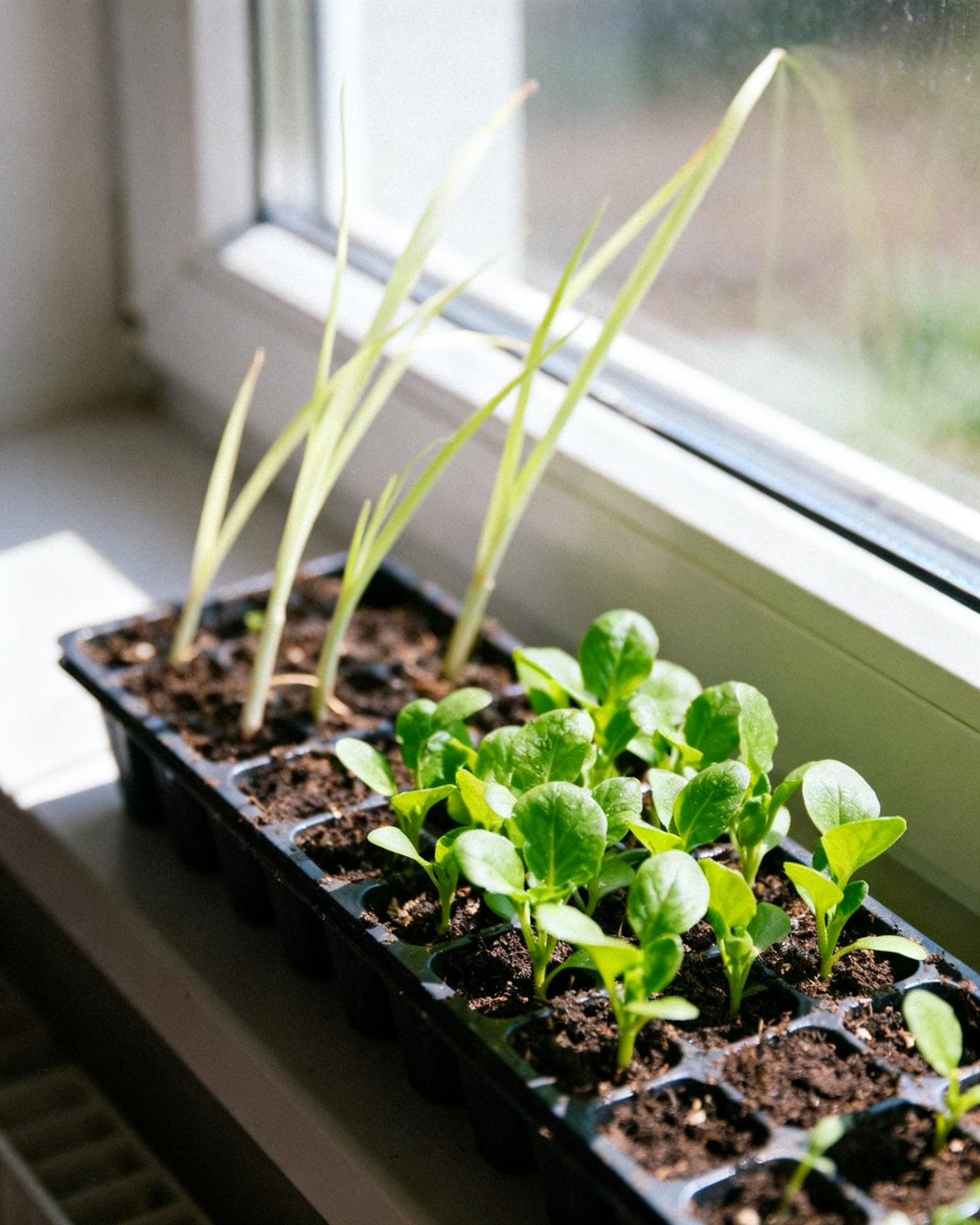
When seedlings fail, the fastest way to a fix is to read the symptom first and work back to the cause. A seedling that collapses at the soil line has a different problem from one that is tall and pale, and a tray with no sprouts at all is a different case again. The table below matches the common symptoms to their usual causes and the first things to change. Most seedling problems come down to three conditions you control indoors: water, light and temperature.
Symptom-to-cause: what you see and what to do
| Symptom | Likely cause | First fix | Prevention |
|---|---|---|---|
| No sprouts after the expected time | Old seed, seed planted too deep, soil too cold or too wet | Check seed with a germination test; sow again at the right depth | Store seed cool and dry; use a soilless mix at 65° to 75°F for most vegetables |
| Seedlings collapse at the soil line | Damping-off: water molds (Pythium, Phytophthora) and the fungus Rhizoctonia | Remove and discard affected seedlings with their mix; do not try to save them | Soilless mix, clean containers, let the surface dry slightly between waterings |
| Tall, pale, leaning stems | Too little light; warmth and crowding make it worse | Move lights closer; lower the temperature | Keep fixtures 2 to 6 inches above plants, 14 to 16 hours a day |
| Yellowing leaves | Overwatering, cold, or exhausted mix | Let the mix dry; check temperature; feed if the mix has run out | Water only when the surface is nearly dry; feed after first true leaves |
| White fuzz or green crust on the mix | Fungus or algae from constant moisture | Scrape off the crust, improve airflow, water less | Do not leave the mix saturated; remove covers once sprouts appear |
| Tiny dark flies around pots | Fungus gnats, a sign of overwatering | Let the mix dry between waterings; use yellow sticky traps to monitor | Avoid constantly moist mix rich in organic matter |
| Stalled growth after planting out | Cold soil, root disturbance, or poor hardening off | Wait for soil to warm; shade new transplants for a few days | Harden off properly; plant on a cloudy day; water in |
Why seedlings collapse at the soil line
A seedling that was standing in the morning and is lying flat by afternoon, with a pinched or water-soaked stem at the soil line, has most likely been lost to damping-off. The water molds behind it need free water, and they do their worst when the mix is poorly drained or kept too wet. The same organisms can kill seeds before they emerge. Infected seedlings cannot be saved: remove them with their mix, wash the containers, and soak them for 1 to 2 minutes in 1 part chlorine bleach to 10 parts water, then rinse. For a full account of the disease and its prevention, see damping-off: why seedlings collapse and how to prevent it.
Why seedlings stretch and turn pale
Tall, thin, weak stems mean the light is too far away or too weak. A windowsill is seldom enough, and the problem is made worse by warmth and crowding. Tomato and cabbage-family seedlings stretch readily. Move the fixture closer: Maryland Extension suggests keeping fluorescent or LED lights 2 to 6 inches above the plants, on for 14 to 16 hours a day with a timer. Clemson Extension gives 16 to 18 hours of bright light and keeps tubes 2 to 4 inches above the seedlings, raising them as plants grow. After potting up, keep the tops of plants 1 to 2 inches from the lights. The full set of causes and fixes is in leggy seedlings: causes and fixes.
Why some seeds never come up
No sprouts can mean old seed, seed planted too deep, or soil that is too cold or too wet. Most warm-season vegetable seeds, such as beans, squash and cucumbers, will not germinate in soil below 50°F. Lettuce, pea, radish, carrot, beet and spinach germinate in soil above 40°F. A potting-mix temperature of 65° to 75°F suits most vegetable seeds. Before sowing a whole packet of doubtful seed, run a germination test: roll 20 seeds in a moist paper towel, seal it in a plastic bag with a few holes, keep it warm, and count sprouts after 7 to 10 days. Discard the seed if fewer than 50% sprout. The steps and other causes are covered in seeds not germinating? Common causes and a germination test.
Water: a frequent cause of seedling trouble
Overwatering is behind many seedling problems. Saturated mix starves roots of oxygen, encourages damping-off and fungus gnats, and turns leaves yellow. Wait until the top of the mix is nearly dry before watering again. Water from the top until it drains, or from below by setting containers in a shallow tray of water; Clemson Extension suggests filling a tray with 1 to 2 inches of water and letting the cells absorb it for 3 to 10 minutes. A clear cover or dome keeps moisture in until sprouts appear and should come off as soon as they do. A small fan near the seedlings from the two-true-leaf stage makes them sway and begins toughening them, but it also dries them faster, so watch moisture.
Light: how much and how close
A window is seldom enough for seedlings; stems stretch and lean toward the glass. Use a fixture instead: Maryland Extension notes that broad-spectrum LED grow lights and cool-white fluorescent tubes (6500K) both work. Keep the light close and on a timer. The difference between a stocky transplant and a weak one is often just the distance from the fixture to the leaves.
Temperature: warm for germination, cooler for growth
Most vegetable seeds germinate well at a potting-mix temperature of 65° to 75°F. A seedling heat mat speeds germination, and a plastic tent over a grow light can hold 70° to 75°F. After germination, seedlings do well with a 55 to 60°F night temperature and a 65 to 70°F day temperature. Too much warmth after sprouting, combined with close spacing, produces the stretched stems described above. Cold soil at planting time stalls warm-season transplants such as peppers, which sit and wait until the soil reaches 65°F.
Tiny flies around the pots
Small dark flies hovering around containers are fungus gnats. Their larvae live in constantly moist potting mix rich in organic matter, so the flies are mainly a sign of overwatering. Let the mix dry between waterings and use yellow sticky traps to monitor the population. Products based on Bacillus thuringiensis var. israelensis (Bti) are labeled for the larvae; read and follow the label. Cultural fixes come first. More on these and other indoor pests is in fungus gnats and other pests on indoor seedlings.
What goes wrong: common mistakes and risks
- Sowing too early. Maryland Extension calls sowing too early a common mistake: it gives tall, root-bound plants that do poorly in the garden. Match the sowing date to the crop’s time indoors, not to the first warm day.
- Leaving seedlings crowded too long. Seedlings started together in a flat should be moved to their own containers shortly after the first true leaves appear. Crowding invites stretch and disease.
- Keeping the mix constantly wet. Let the surface dry slightly between waterings. Remove covers once sprouts appear.
- Using garden soil in containers. Garden soil is too dense (about 75 pounds per cubic foot) and may carry weed seeds and pathogens. Use a soilless seed-starting or potting mix, which weighs about 10 pounds per cubic foot.
- Skipping the transition outdoors. Seedlings moved straight from indoors to the garden can sunburn or chill. Harden them off gradually, and do not put tender seedlings out on windy days or below 45°F.
- Expecting a rescue after damping-off. Infected seedlings cannot be saved. Remove them and correct the conditions before sowing again.
When to start over
If a tray has lost most of its seedlings to damping-off, or a germination test shows poor viability, the practical move is to discard the mix and seedlings, clean and disinfect the containers, and sow again with fresh mix and seed. Correct the water, light and temperature conditions first, or the second attempt will follow the first. For crops that resent transplanting, such as beans, corn and carrots, sow directly in the garden instead of starting indoors.
Common questions
Why are my seedlings dying and falling over?
Seedlings that collapse at the soil line usually have damping-off, caused by water molds that need free water. Remove and discard affected seedlings with their mix, wash containers, and let the mix surface dry between waterings. Infected seedlings cannot be saved.
Why are my seedlings turning yellow?
Yellowing often comes from overwatering, cold conditions, or a mix that has run out of nutrients. Let the mix dry slightly, check the temperature, and feed once the first true leaves appear if the mix no longer supplies enough fertilizer.
Why are my seedlings tall and pale?
Tall, pale, leaning stems mean too little light. Move the fixture closer, keep it on 14 to 16 hours a day, and lower the temperature if possible. Tomato and cabbage-family seedlings stretch most readily.
What are the tiny flies around my seedling pots?
They are fungus gnats, and their larvae live in constantly moist potting mix. Let the mix dry between waterings and use yellow sticky traps to monitor. Products based on Bti are labeled for the larvae; read and follow the label.
Why did my seeds never come up?
Old seed, seed planted too deep, or soil that is too cold or too wet are the usual causes. Run a germination test on a sample before sowing again, and keep the mix at 65° to 75°F for most vegetables.
Read next
Damping-Off: Why Seedlings Collapse and How to Prevent It
Damping-off is a water-mold disease that kills seeds before they emerge and topples seedlings at the soil line. Learn the signs, the causes, and how to prevent it.
Fungus Gnats and Other Pests on Indoor Seedlings
Tiny black flies over seedling trays mean the mix is too wet. Learn to dry it out, trap the adults, and check seedlings and transplants for other pests.
Leggy Seedlings: Why They Stretch and How to Fix It
Leggy seedlings are tall, thin and weak. Learn the causes—low light, warmth, crowding—and the fixes that make stocky transplants before planting out.