Fungus Gnats and Other Pests on Indoor Seedlings
Tiny black flies over seedling trays mean the mix is too wet. Learn to dry it out, trap the adults, and check seedlings and transplants for other pests.
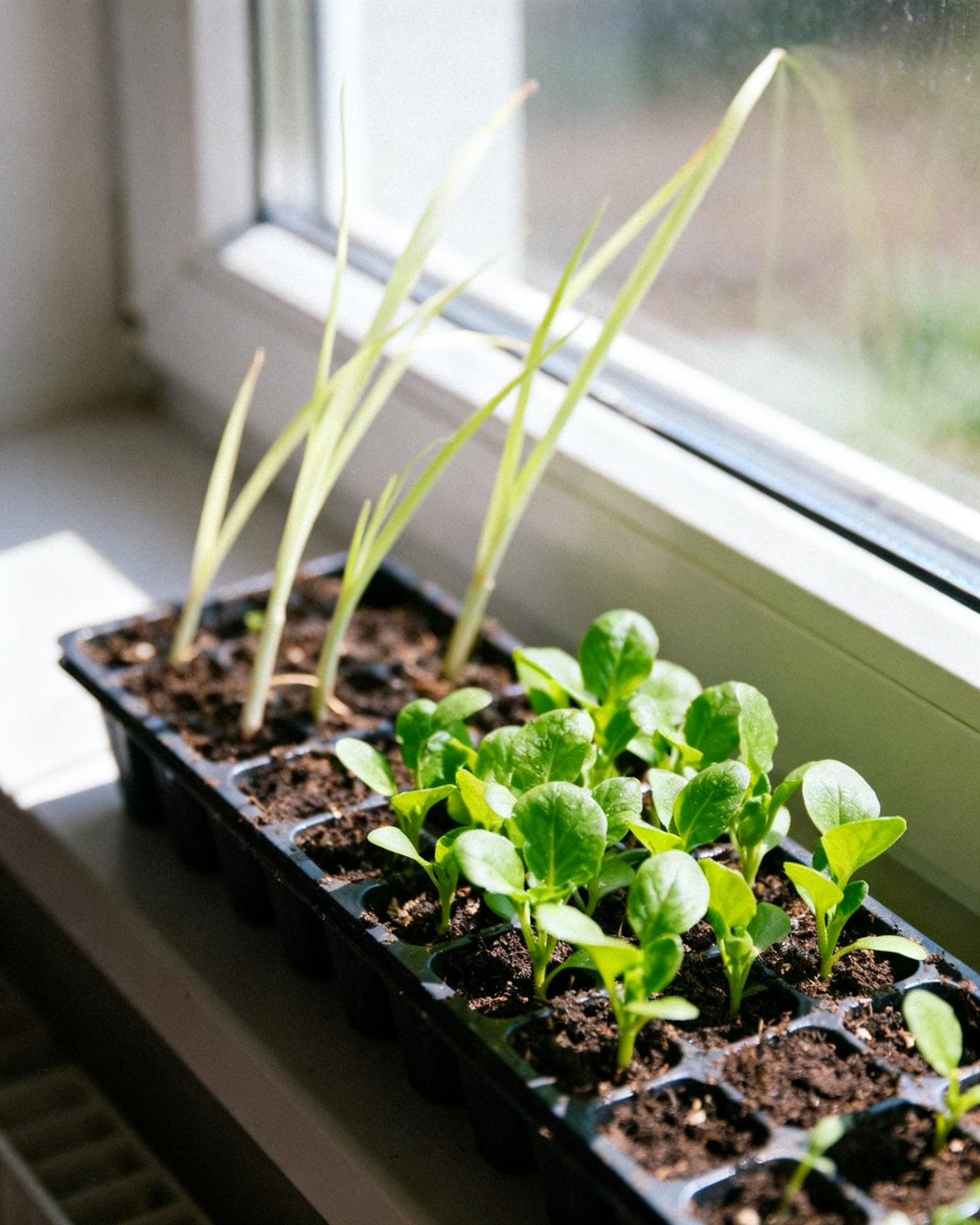
Tiny dark flies hovering over a seedling flat are usually fungus gnats, and they are telling you something useful: the potting mix is staying wet too long. The adults are a nuisance, and the larvae in the mix can nibble fine roots but are rarely the main threat to seedlings; the wet mix they point to is. Both are managed mainly by changing how you water. Before reaching for a spray, confirm what you are seeing, because the fix for fungus gnats is different from the fix for aphids or whiteflies, and spraying the wrong thing wastes time and can burn young plants.
What fungus gnats look like and where they come from
Fungus gnats are small, dark, mosquito-like flies that run or fly weakly around pots and trays. They do not bite. The adults lay eggs in moist potting mix rich in organic matter, and the larvae live in that mix, feeding on fungi, algae and decaying organic material, and sometimes on fine roots.
The flies are mainly a sign of overwatering. Constantly moist mix, poor drainage, a clear dome left on too long, or a tray of standing water all favor them. Soilless seed-starting mix reduces soil-borne disease, but it still supports gnats if it never dries at the surface. Seedlings in a warm room under lights, with the surface kept damp, are a common place to find them.
Telling them apart from other problems
A few dark flies do not by themselves explain collapsed seedlings. If seedlings are damping off, the stems pinch at the soil line and the plants fall over; that is a water-mold problem, not a gnat problem. If leaves are stippled, sticky or webbed, look for aphids, whiteflies or spider mites. Use the seedling problems diagnosis guide to sort out which symptom belongs to which cause before you treat anything.
Drying the mix is the first fix
Fungus gnats need constant moisture. Let the top of the mix dry slightly between waterings, and water only when the surface is nearly dry. Water from the top until it drains, or from below by setting containers in a shallow tray, then empty the tray. Clemson Extension suggests filling a tray with 1 to 2 inches of water and letting the cells absorb it for 3 to 10 minutes; that is enough, and leaving the tray full afterward keeps the mix saturated.
Saturated media starve roots of oxygen, so drying down a little helps the seedlings as well as the gnat problem. Improve airflow with a small fan near the seedlings from the two-true-leaf stage; it makes stems sway and toughens them, and it dries the surface faster, so watch moisture more closely. Take clear covers off as soon as sprouts appear. The full routine for wet-and-dry cycles is in watering and fertilizing seedlings without drowning them.
Traps and products for fungus gnats
Yellow sticky traps catch adults and tell you whether the population is rising or falling. They do not control larvae in the mix, but they are a useful monitor and reduce the adults that would lay more eggs.
For the larvae, products based on Bacillus thuringiensis var. israelensis (Bti) are labeled for fungus gnats. If you use one, read and follow the label exactly; do not mix products or increase the rate. Cultural fixes come first: dry the surface, improve drainage, remove standing water, and keep the area around the trays clean of spilled mix and plant debris. Infected or badly infested mix is best discarded rather than reused.
| What you see | Likely cause | First fix |
|---|---|---|
| Small dark flies running on the mix or around pots | Fungus gnats, mix kept too wet | Let the surface dry between waterings; yellow sticky traps; Bti product only per label |
| Seedlings collapse at the soil line, stem pinched | Damping-off (Pythium and Phytophthora water molds, Rhizoctonia fungus) | Discard affected seedlings and mix; use soilless mix and clean containers; do not overwater |
| Sticky leaves, clusters of small insects on new growth | Aphids | Rinse or wipe off; inspect new plants before bringing them in |
| Tiny white insects that flutter when disturbed | Whiteflies | Yellow sticky traps; isolate and inspect plants; follow label if treating |
| Fine webbing, pale stippling on leaves | Spider mites | Rinse foliage; isolate and inspect plants; follow label if treating |
Other pests to check for on seedlings and transplants
Aphids and whiteflies are the pests most likely to arrive on plants you bring home rather than hatch in your mix. Aphids cluster on soft new growth and leave sticky honeydew; whiteflies flutter up when a plant is disturbed. Both can build up quickly indoors where there are no natural enemies.
Inspect every plant before it joins your seedlings. Look at the undersides of leaves, the growing tips and the soil surface. Reject plants with pests, and isolate new arrivals for a few days. The same inspection applies when you are choosing plants at a garden center; the guide to choosing healthy vegetable transplants covers stocky growth, white roots and signs of trouble. Good transplants are stocky with deep green leaves and white, fibrous roots; avoid overgrown, woody plants with circling roots and any plant with insects.
If aphids or whiteflies are already present, start with cultural controls: rinse foliage with water, remove heavily infested leaves, improve airflow, and keep plants from touching so pests cannot walk from one to the next. Insecticidal soap or other labeled products may be used, but read and follow the label, and test on a few leaves first because young seedlings are easily burned. Never spray before you have identified the pest; a fungicide does nothing for insects, and an insecticide does nothing for damping-off.
What goes wrong: soggy mix, late identification and crowded trays
A common mistake is keeping the mix soggy. Seedlings need moisture, but not constant saturation. A tray that never dries, a dome left on after germination, or pots sitting in water all invite fungus gnats and favor damping-off. Water by feel and by weight, not on a fixed schedule.
The second mistake is spraying before identifying the pest. Dark flies, pinched stems and sticky leaves are three different problems with three different fixes. Confirm the cause first, then choose the least disruptive control.
The third is crowding. Seedlings left too long in a flat, or plants set too close together, stay humid and are harder to inspect. Pot them up on time, hold seedlings by a leaf or the cotyledons rather than the stem, and give each plant its own container as soon as the first true leaves appear. Good airflow and adequate spacing do more against pests than any spray.
Finally, do not reuse mix from a flat where seedlings damped off or gnats were heavy. Discard the mix, wash containers, and soak them for 1 to 2 minutes in 1 part chlorine bleach to 10 parts water, then rinse. Clean containers and fresh soilless mix remove the starting population.
A short routine that keeps pests down
Check trays daily for flies, sticky leaves and collapsed stems. Water only when the surface is nearly dry, and empty saucers after watering. Keep a small fan moving air once seedlings have two true leaves. Put yellow sticky traps near the trays as a monitor. Inspect every new plant before it comes indoors, and isolate it for a few days. If you use a Bti product for larvae, read and follow the label. These steps address the cause, which is usually too much water and too little airflow, rather than the symptom.
Common questions
How do I get rid of fungus gnats in my seedling trays?
Start by letting the top of the mix dry slightly between waterings and emptying any standing water. Improve airflow with a small fan and remove clear covers once seeds sprout. Yellow sticky traps catch adults, and Bti products labeled for fungus gnats can be used on the larvae if you read and follow the label.
Are fungus gnats harmful to seedlings?
The adults are mostly a nuisance. The larvae live in moist mix and can feed on fine roots, and heavy populations are a sign the mix is too wet, which also favors damping-off. The main risk is the wet conditions the gnats indicate, not the flies themselves.
Why are there tiny black flies in my seedling trays?
They are fungus gnats, and they lay eggs in moist potting mix rich in organic matter. Constantly wet mix, poor drainage and leftover water in trays all favor them. Drying the surface between waterings is the first step.
Can aphids or whiteflies come in on transplants?
Yes. Aphids and whiteflies often arrive on plants brought home from a garden center or nursery. Inspect the undersides of leaves and the growing tips before buying, and isolate new plants for a few days before setting them near your seedlings.
Should I spray my seedlings for pests?
Only after you have identified the pest. Fungus gnats, damping-off, aphids and whiteflies need different responses, and spraying the wrong product can burn young leaves. Start with cultural fixes such as drying the mix, improving airflow and removing infested leaves, and follow the label on any product you use.
Read next
Damping-Off: Why Seedlings Collapse and How to Prevent It
Damping-off is a water-mold disease that kills seeds before they emerge and topples seedlings at the soil line. Learn the signs, the causes, and how to prevent it.
Leggy Seedlings: Why They Stretch and How to Fix It
Leggy seedlings are tall, thin and weak. Learn the causes—low light, warmth, crowding—and the fixes that make stocky transplants before planting out.
Seedling Problems: A Diagnosis Guide
A symptom-to-cause guide to seedling problems: no sprouts, damping-off, leggy growth, yellow leaves, fungus gnats, and stalled transplants, with fixes.