Seeds Not Germinating? Causes and a Germination Test
Seeds not germinating? Learn the common causes—old seed, cold soil, too deep, too wet—and how to run a paper-towel germination test to check old seed.
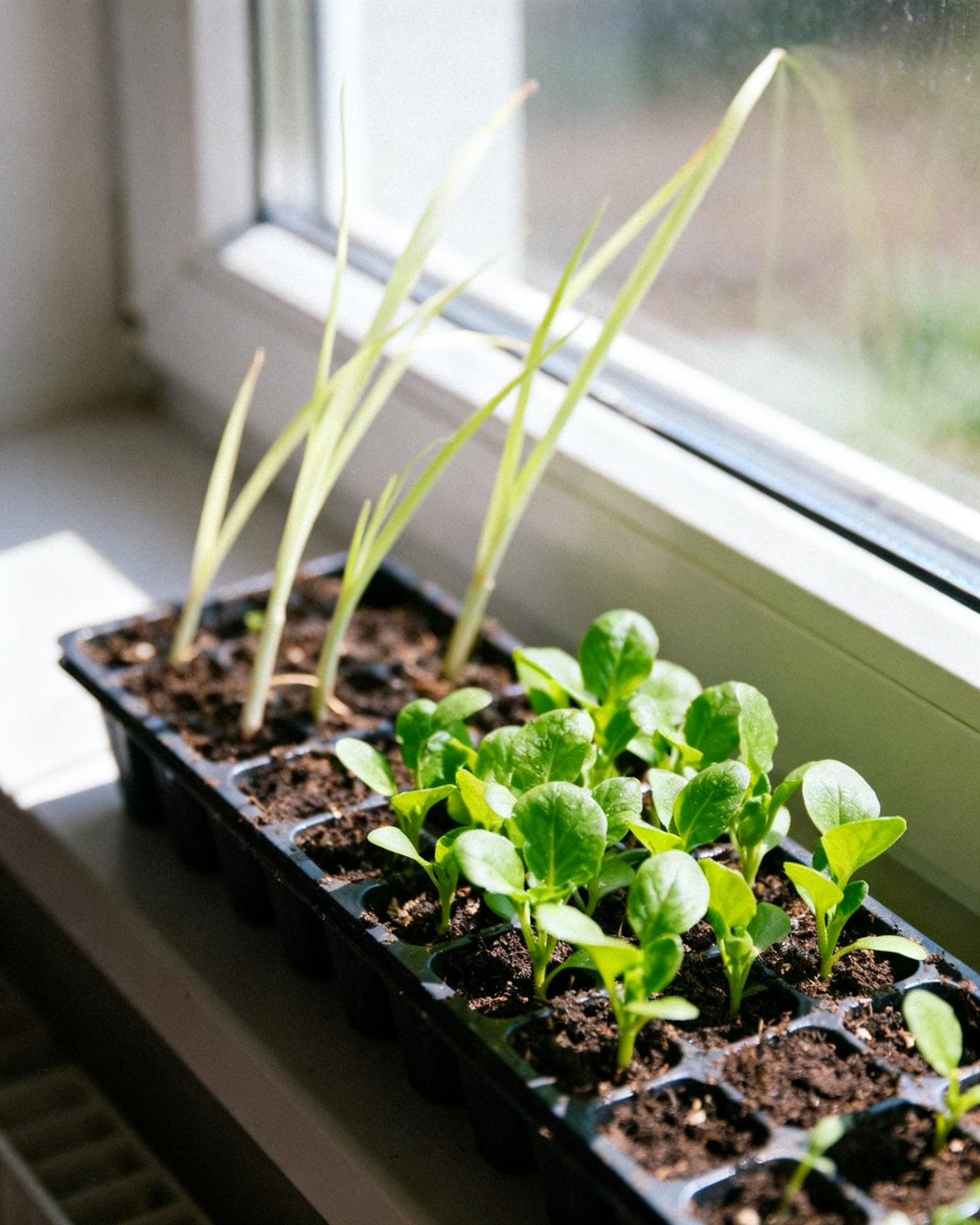
When a flat of seeds sits for a week or two with nothing coming up, the cause is usually one of a few things: the seed is old or was stored badly, the mix is too cold or too wet, the seed went in too deep, or the seed needed light and got covered. Before you sow another packet, run a quick germination test on the seed you have. It tells you whether the problem is the seed or the conditions, and it saves you from waiting on seed that will never sprout.
Start with the seed: old seed and how it was stored
Seed is alive, and it loses vigor with age and with heat and moisture. Leftover seed keeps best cool and dry, ideally sealed in the refrigerator. Some kinds are short-lived: onion, corn, leek and parsley seed last only 1-2 years. If your packet is older than that, or spent the summer in a hot shed, suspect the seed first.
The paper-towel germination test
- Count out 20 seeds and roll them in a moist paper towel.
- Put the roll in a plastic bag with a few holes poked in it.
- Set it in a warm place.
- Count the sprouts after 7-10 days.
If fewer than 50% sprout, discard the seed. The same method, checked after 5-7 days, shows roots and lets you pre-sprout seed before sowing. Do not pre-soak bean and corn seed, Maryland Extension advises.
Slow species are not dead
Some seeds simply take longer. Lima bean, parsley, watermelon and okra germinate slowly, 10-21 days at typical spring soil temperatures. Giving up on day seven is a common mistake. Check the packet or a reliable reference for the species before you decide the seed is bad.
Temperature: a common reason seeds won’t sprout
A potting-mix temperature of 65° to 75°F suits most vegetable seeds, according to Maryland Extension. Below that range, germination of most vegetables slows. Most warm-season vegetable seeds—beans, squash, cucumbers—will not germinate in soil below 50°F. Lettuce, pea, radish, carrot, beet and spinach will germinate in soil above 40°F. Soil over 85°F is usually a problem only for spinach and lettuce seed.
If your seed flat sits on a cold basement floor or by a chilly window, warmth is the fix. A seedling heat mat speeds germination, and a plastic tent over a grow light can hold 70° to 75°F. The top of a refrigerator is a warm spot. For more on matching temperature to crop, see seed germination temperature, domes and heat mats.
Too wet, too dry, or too deep
Water and air
Seed needs moisture, but saturated mix starves roots of oxygen and invites damping-off. Water until the mix is moist like a wrung-out sponge, then let the top dry slightly between waterings. A clear cover or dome keeps moisture in until sprouts appear and comes off as soon as they do.
Depth
Sow about twice the seed’s diameter—a seed 1/8 inch wide goes about 1/4 inch deep, per Maryland Extension; the Maryland germination page gives the rule as 2-3 times the diameter. Seed planted too deep may never emerge. In a flat, shallow rows 1/8 to 1/4 inch deep and 1 to 2 inches apart work for most vegetables.
Light-loving seed
Lettuce and celery seed germinate best in light and are left uncovered or barely covered. If you buried them, resow on the surface and press the seed in.
Outdoor sowing: cold, wet soil and crusting
Direct-sown seed faces more hazards than indoor seed. Cold, wet soil slows or stops germination, and corn and bean seed rot in it. Heavy clay or crusted soil can keep seedlings from pushing through. Birds and rodents take seed, and a dry spell after sowing can stop it. Wait until the soil has warmed for warm-season crops, keep the surface evenly moist, and cover seed lightly. For which crops belong in the garden rather than in a flat, see direct sowing vs. transplants.
What goes wrong: mistakes that look like bad seed
| Symptom | Likely cause | Fix and prevention |
|---|---|---|
| Nothing up, warm-season crop | Mix or soil too cold; most warm-season seed will not germinate below 50°F | Warm the mix; use a heat mat; wait for soil to warm outdoors |
| Nothing up, seed buried deep | Planted too deep | Sow about twice the seed’s diameter; resow shallow |
| Lettuce or celery missing | Seed covered; needs light | Leave seed uncovered or barely covered |
| Few sprouts, old packet | Seed aged or stored warm | Run the paper-towel test; store seed cool and dry |
| Slow, uneven stand | Slow species (lima bean, parsley, watermelon, okra) | Wait 10-21 days before judging |
| Seed rotted in cold, wet soil | Cold, wet conditions | Wait for warmth; improve drainage; do not pre-soak beans and corn |
| Damp, moldy surface, no sprouts | Overwatering, poor drainage | Let the top dry between waterings; use a soilless mix |
If seedlings do come up and then collapse, the problem has moved from germination to seedling stage. See seedling problems: a diagnosis guide for damping-off, leggy growth and pests.
Prevention: store seed well and test before you sow
Store leftover seed cool and dry, sealed in the refrigerator. Label the year. Before sowing a packet of unknown age, run the 20-seed test. If fewer than half sprout, discard the seed and start with fresh seed. Do not pre-soak bean and corn seed, and do not give up on slow species before their time.
When the problem is the conditions, not the seed
If the test shows good germination but the flat does not, the seed is fine and the conditions are wrong. Check temperature first, then moisture, then depth. A small fan near seedlings from the two-true-leaf stage makes them sway and begins toughening them, but it also dries the mix faster, so watch moisture. Once seedlings are up, the job shifts to light and airflow; a window is seldom enough, and stems stretch and lean toward it.
A short checklist before you resow
- Did the seed pass the paper-towel test?
- Is the mix between 65° and 75°F for most vegetables?
- Is the mix moist but not saturated?
- Was the seed sown about twice its diameter deep?
- Did light-loving seed stay uncovered?
- Has enough time passed for a slow species?
Working through these in order usually finds the cause. If the seed is good and the conditions are right, the seedlings will come.
Common questions
why won't my seeds sprout?
The usual causes are old or badly stored seed, mix that is too cold or too wet, seed planted too deep, or light-loving seed that got covered. Run a paper-towel test on the seed to rule out bad seed, then check temperature and moisture.
how do I do a seed germination test?
Roll 20 seeds in a moist paper towel, put the roll in a plastic bag with a few holes, and keep it warm. Count sprouts after 7-10 days. If fewer than 50% sprout, discard the seed.
how long do seeds last?
It depends on the kind and how they were stored. Onion, corn, leek and parsley seed are short-lived, lasting 1-2 years. Store all leftover seed cool and dry, ideally sealed in the refrigerator.
my old seeds didn't come up—can I still use them?
Test them first. If the paper-towel test shows fewer than half sprouting, the seed is not worth sowing. If most sprout, the problem was conditions, not the seed.
should I pre-soak bean and corn seed?
No. Maryland Extension advises against pre-soaking bean and corn seed. Sow them dry and directly in the garden once the soil has warmed; both rot in cold, wet soil.
Read next
Damping-Off: Why Seedlings Collapse and How to Prevent It
Damping-off is a water-mold disease that kills seeds before they emerge and topples seedlings at the soil line. Learn the signs, the causes, and how to prevent it.
Fungus Gnats and Other Pests on Indoor Seedlings
Tiny black flies over seedling trays mean the mix is too wet. Learn to dry it out, trap the adults, and check seedlings and transplants for other pests.
Leggy Seedlings: Why They Stretch and How to Fix It
Leggy seedlings are tall, thin and weak. Learn the causes—low light, warmth, crowding—and the fixes that make stocky transplants before planting out.