Transplanting Seedlings Into the Garden
How to transplant seedlings into the garden: hardening off, when to plant out by crop and soil temperature, planting day steps, spacing, and avoiding shock.
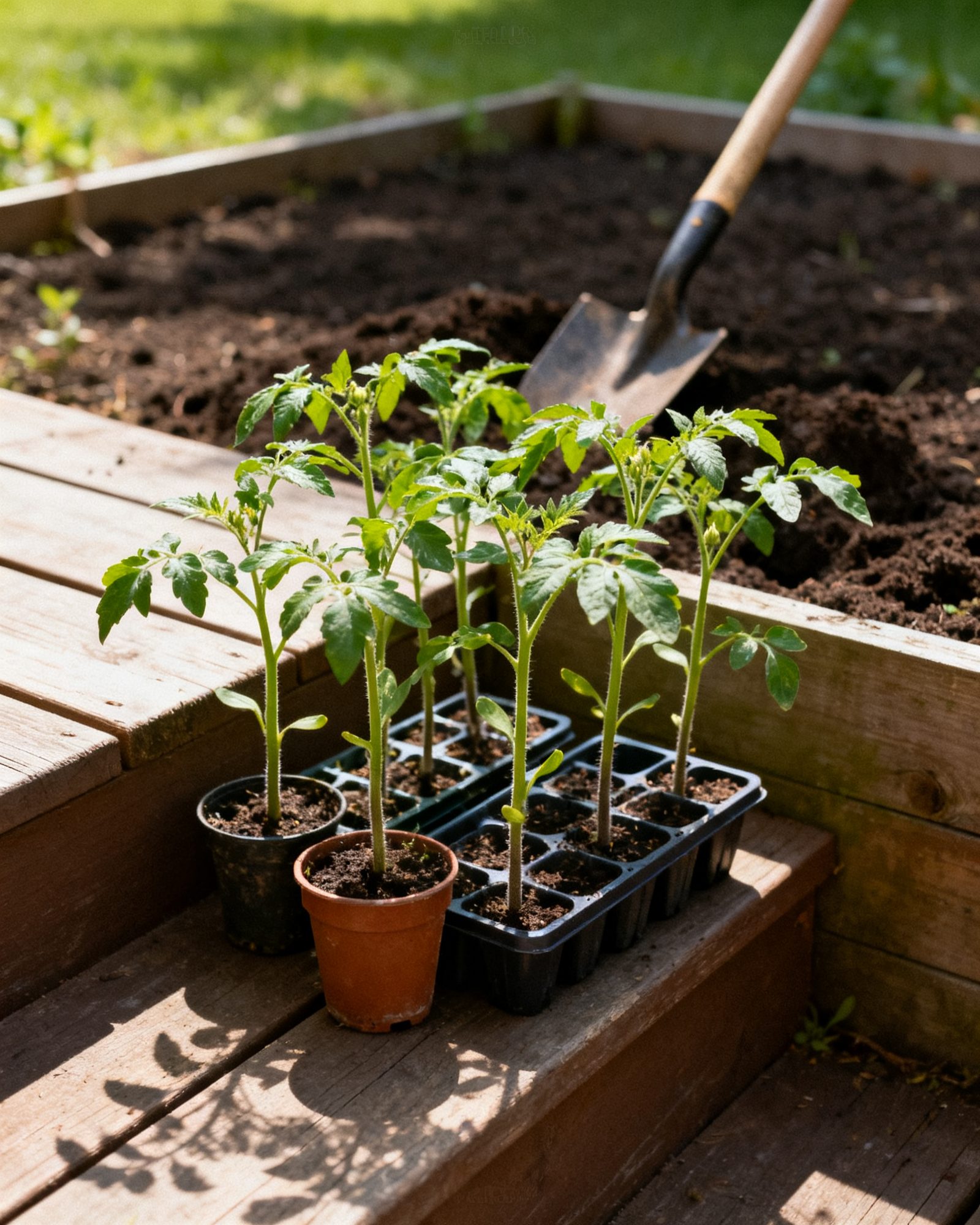
Transplanting seedlings succeeds when three things line up: the plants have been hardened off, the soil is warm enough for the crop, and the weather on planting day is mild. Set out tender seedlings straight from indoors, or into cold soil, and they stall for weeks. The sequence below is the one Cooperative Extension recommends, with the weather limits and the mistakes that set plants back.
When to plant seedlings outside
Two dates decide the timing: your last frost date and the soil temperature. The last frost date is a probability, not a promise. NOAA’s National Centers for Environmental Information publishes the probable dates of the last spring freeze, and the date usually quoted as the “average last frost date” is the 50% date for 32°F — in one year out of two the last freeze comes later. A conservative gardener plants by the 10% date, when only one year in 10 has a later freeze. To find your own dates and understand how much to trust them, see last frost date: how to find it and how much to trust it.
Soil temperature matters as much as the calendar. Warm-season crops depend on warmth from the start: most of their seeds will not germinate in soil below 50°F. Peppers set out before the soil reaches 65°F “just sit there,” according to Maryland Extension. Tomatoes want soil that has warmed, and black plastic laid 2-3 weeks before planting warms it further.
Cool-season and warm-season rules
| Crop group | Cold tolerance | When to set out | Notes |
|---|---|---|---|
| Broccoli, cabbage, cauliflower | Hardy; withstands heavy frost | Five- to seven-week-old transplants go out four weeks before the last spring frost date | Temperatures below 45°F can stop heading or cause bolting |
| Lettuce and other greens | Cool-season | Early, once the soil can be worked | Bring in if a freeze is forecast during hardening off |
| Tomato | Very tender | After all danger of frost, when the soil has warmed | Full sun at least 6 hours a day, 8-10 preferred |
| Pepper | Very tender | After the soil has thoroughly warmed, above 65°F | Very hot nights above 75°F slow or stop fruit set |
| Cucumber and melon | Very tender | After frost, when the soil has warmed | Stop growing if hardened too severely; stay out overnight only if it will not fall below 50°F |
| Basil | Not tolerant of chilly temperatures | After all danger of frost | Full sun, 6 or more hours of direct summer sun |
Some crops should not be transplanted at all. Beans, corn and carrots do not do well as transplants and should be sown directly in the garden, Clemson Extension notes. For the full comparison, see direct sowing vs. transplants: which crops to start where.
Harden off before planting day
Hardening off gradually adapts indoor-grown plants to sun, wind and cold. Maryland Extension describes a 5- to 14-day period depending on the crop, beginning 1-2 weeks before planting out. Clemson Extension starts once plants are about three inches tall and continues for two to three weeks. The method: start in a shaded, wind-protected spot for part of the day, increase sun by an hour or two each day, and water less often but never let plants wilt. Do not put tender seedlings out on windy days or below 45°F. Bring cool-season crops such as lettuce and cabbage in if a freeze is forecast, and warm-season crops such as tomato and pepper in if the night will drop below 50°F. A cold frame is an excellent place to harden off. The full schedule is in how to harden off seedlings before planting out.
Hardening off matters most for cabbage, broccoli and cauliflower; it matters less for warm-season transplants set out after all danger of frost into soil above 60°F. Overdoing it harms some crops: cauliflower can form thumb-sized heads and stop. After proper hardening, tomato plants can usually tolerate a light, unexpected frost with little damage.
Planting day, step by step
- Pick a cloudy, calm day. Water the plants several hours before planting.
- Dig a hole large enough for the root mass. Set the plant at the same depth it grew, with two exceptions: tomato seedlings can be set deeper than they grew, and tall tomato transplants can go in a trench with only 2 or 3 sets of leaves above ground, because the buried stem roots. Avoid setting the root ball deep into cold soil.
- Firm the soil around the roots.
- Water in with a weak liquid fertilizer at label dilution.
- Shade and shelter new transplants for a few days with baskets, pots or floating row cover.
Handle seedlings by a leaf or the cotyledons, never by the stem. If a transplant came in a biodegradable pot of peat, coir or manure, it can go in the ground, but remove the base and any rim above the soil line — an exposed rim wicks water away from the roots.
Spacing
Follow the seed-packet spacing. Squeezing plants closer causes disease and lowers yield. Maryland Extension’s crop profiles give these in-row and between-row spacings:
| Crop | In the row | Between rows |
|---|---|---|
| Tomato | 18”-36” | 48”-60”, depending on staking or caging |
| Pepper | 12”-24” | 30”-36” |
| Cucumber | 12” | 48”-72”, or two to three plants per hill |
| Broccoli | 16”-24” | 24”-30” |
| Basil | Thin to 12” | 18” |
Transplant shock and how to limit it
Transplant shock is the setback a plant shows after moving: wilting, slow growth, sometimes yellowing lower leaves. It comes from disturbed roots, sudden sun and wind, cold soil and dry roots. The defenses are all in the steps above — harden off, water before digging, keep the root mass intact, firm the soil, water in, and shade for a few days. Cucumbers in particular should have their roots disturbed as little as possible.
Slow early growth in peppers usually means cold conditions or overgrown, stressed transplants. If a cold night is forecast after planting, see protecting transplants from frost and cold nights.
Buying transplants
Good transplants are stocky with deep green leaves and white, fibrous roots. Avoid overgrown, woody plants with a thick mat of circling roots, and plants with pests. For tomatoes, buy stocky plants about 6 to 10 inches tall. A tomato sown 5 to 6 weeks before planting out makes a stocky 8- to 10-inch plant; the ideal transplant is about as wide as it is tall. Overgrown, root-bound plants do poorly in the garden, which is why sowing too early indoors is a common mistake.
What goes wrong
- Planting into cold soil. Tender crops stall, and peppers may sit without growing. Wait until the soil has warmed for the crop.
- Skipping hardening off. Sunburn and wind damage set plants back, and tender seedlings can be killed by a cold night they would otherwise survive.
- Overhardening. Cucumbers and melons stop growing if hardened too severely; cauliflower can button.
- Crowding. Plants set closer than the packet spacing catch disease and yield less.
- Deep root balls in cold soil. Tomatoes especially should not have the root ball set deep into cold ground.
- Exposed pot rims. A biodegradable rim above the soil line wicks water away from the roots.
- Planting on a windy day. Tender seedlings suffer; wait for calm weather.
- Forgetting the forecast. Frost dates are past averages, not forecasts. Check the forecast before setting out tender plants, and ask the local Cooperative Extension office for local dates.
After planting
Keep new transplants watered until they establish, and shelter them for a few days. Full sun for fruiting vegetables means at least 6 hours of direct light a day. Basil leaves can be picked about 6 weeks after planting; pinch stems for bushy growth. Watch for pests and disease in the first weeks, and remember that crowded plants are more prone to both.
Common questions
How do I know when to plant seedlings outside?
Use your last frost date and the soil temperature. Tender crops such as tomato and pepper go out after all danger of frost, and peppers wait until the soil reaches 65°F. Hardy crops such as broccoli can go out four weeks before the last spring frost. Check the forecast before planting.
Do I have to harden off seedlings before transplanting?
Yes, for most crops. Hardening off gradually adapts indoor-grown plants to sun, wind and cold; Maryland Extension describes 5 to 14 days, beginning 1-2 weeks before planting out, and Clemson Extension two to three weeks. Skipping it can cause sunburn, wind damage or death on a cold night.
How do I reduce transplant shock?
Harden off first, water plants several hours before digging, keep the root mass intact, firm the soil, water in with a weak liquid fertilizer at label dilution, and shade new transplants for a few days. Plant on a cloudy, calm day.
Can I plant tomatoes deeper than they grew?
Yes. Tomato seedlings can be set deeper than they grew, and tall transplants can go in a trench with only 2 or 3 sets of leaves above ground; the buried stem roots. Avoid setting the root ball deep into cold soil.
What does a good transplant look like when I buy one?
Stocky with deep green leaves and white, fibrous roots. Avoid overgrown, woody plants with a thick mat of circling roots, and plants with pests. For tomatoes, look for stocky plants about 6 to 10 inches tall.
Read next
How to Choose Healthy Vegetable Transplants
Learn how to choose healthy transplants: stocky stems, deep green leaves, white roots, no pests. Avoid root-bound or flowering plants and hold them properly.
Direct Sowing vs. Transplants: Which Crops Go Where
Learn which vegetables to start indoors and which to direct sow, with a crop-by-crop table, soil temperature limits, and mistakes that set plants back.
Hardening Off Seedlings: A Gradual Move to the Garden
Hardening off takes 5 to 14 days by Maryland Extension or two to three weeks by Clemson. Learn the schedule, temperature limits and mistakes to avoid.